Conservative Financial Models Showing the Measurable Impact of Seed IQ™ in Data Centers and Dynamic Load Environments.
Seed IQ™ increases usable energy yield from existing infrastructure by tightening inefficiencies, aligning subsystems, and governing execution coherently across electrical and thermal domains.
Below are two conservative, illustrative scenarios showing both:
- Direct energy savings
- Capacity unlock (yield amplification)
All numbers use modest assumptions and are intended to demonstrate scale, not best-case performance.
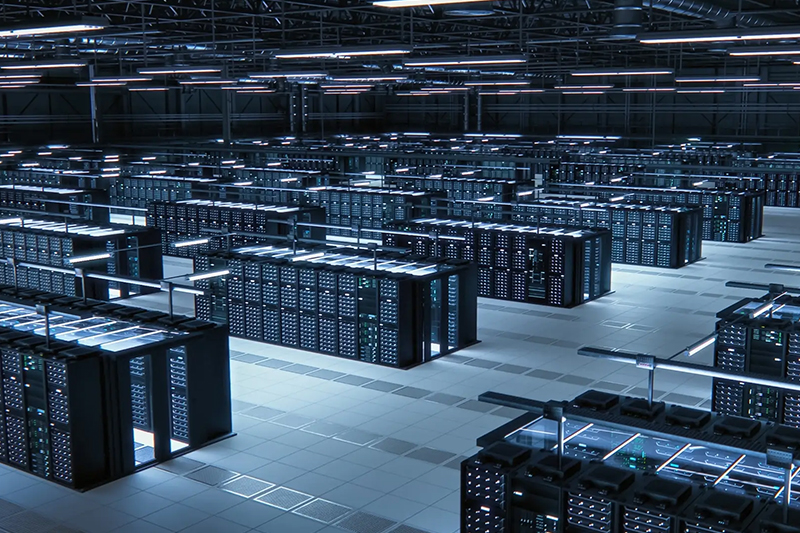
Data Center Use Case
Increasing Sellable Compute Without Expanding Power
Baseline Assumptions
- IT Load: 50 MW (average)
- Baseline PUE: 1.35
- Post-Seed IQ PUE: 1.32
- Electricity Cost: $0.09 per kWh
- Annual Hours: 8,760
A 0.03 PUE improvement is intentionally conservative. Many facilities fluctuate more than this daily due to cooling oscillation, load prediction buffers, and safety overcompensation.
1) Direct Energy Savings
Baseline Facility Power
50 MW × 1.35 = 67.5 MW
Improved Facility Power
50 MW × 1.32 = 66.0 MW
Reduction in Draw
1.5 MW continuous reduction
Annual Energy Saved:
1.5 MW × 8,760 hours = 13,140,000 kWh
Annual Cost Savings:
13,140,000 × $0.09 = $1.18 million per year
This is achieved without hardware replacement — purely through adaptive coordination across cooling systems, power distribution, battery behavior, and load conditions.
2) Yield Amplification: Unlocking Additional IT Capacity
Many data centers are constrained by a fixed facility power cap (utility limit, transformer capacity, or contracted load).
Assume a 70 MW facility cap.
IT capacity = Facility Power ÷ PUE
Baseline IT Capacity:
70 ÷ 1.35 = 51.85 MW
Improved IT Capacity:
70 ÷ 1.32 = 53.03 MW
Additional IT Capacity Unlocked:
1.18 MW
That represents a 2.27% increase in sellable compute capacity, using the same physical infrastructure.
If incremental capacity is monetized conservatively at:
- $100–$200 per kW per month
Then:
1,180 kW × $100–$200
= $118,000–$236,000 per month
Annualized:
$1.4M–$2.8M in additional revenue capacity
Data Center Impact Summary
From a modest 0.03 PUE improvement:
- ~$1.18M/year in direct energy savings
- ~$1.4M–$2.8M/year in additional monetizable IT capacity
This does not assume breakthrough hardware or redesign — only improved multi-agent execution governance across existing systems.
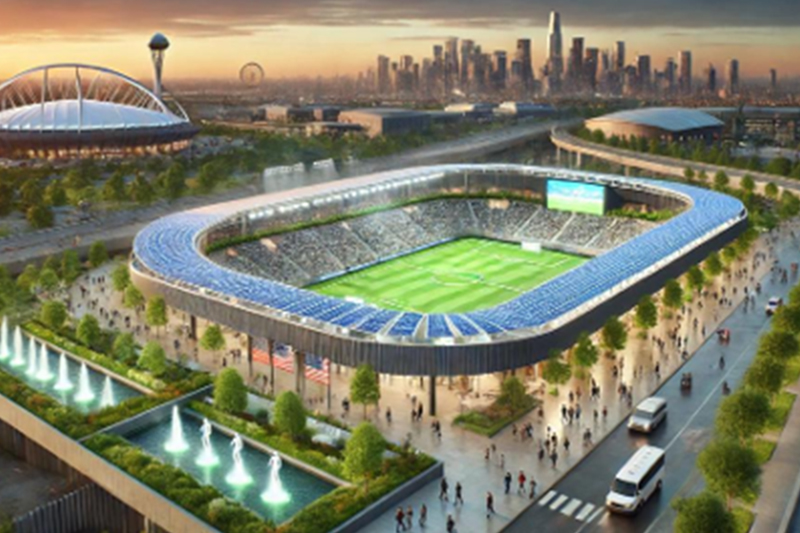
Stadium & Event Venue Use Case
Adaptive Control of Highly Dynamic Load Environments
Stadiums and large event venues experience extreme load swings tied to:
- Event scheduling
- Lighting and media production
- HVAC overcompensation
- Concessions and hospitality
- Security and broadcast infrastructure
These facilities are typically engineered with wide safety margins and reactive control strategies.
Baseline Assumptions
- Peak Facility Capacity: 20 MW
- Average Load During Events: 12 MW
- Annual Event Days: 150
- Electricity Cost: $0.12 per kWh
- Conservative efficiency improvement: 3% total facility reduction
1) Direct Energy Savings
Average event-day reduction:
12 MW × 3% = 0.36 MW reduction
Energy Saved per Event Day:
0.36 MW × 10 operational hours = 3.6 MWh
Annual Event-Day Savings:
3.6 MWh × 150 days = 540 MWh
540,000 kWh × $0.12 = $64,800 per year
If extended into partial non-event days (HVAC, base load coordination), total annual savings conservatively approach:
$100,000–$150,000 per year
These savings arise from tighter HVAC coordination, reduced overcooling, synchronized lighting and media systems, and better load balancing across electrical distribution.
2) Yield Amplification: Increasing Usable Capacity During Events
Many stadiums operate near contracted peak capacity during major events.
If Seed IQ™ safely reduces overhead by 3%:
20 MW × 3% = 0.6 MW capacity freed
That 0.6 MW can be repurposed for:
- Additional premium hospitality infrastructure
- Expanded broadcast operations
- Temporary high-density compute deployments
- Enhanced experiential installations
- EV fast charging during events
If additional temporary capacity is monetized at conservative event-level revenue multipliers, this can represent:
$250,000–$500,000+ in additional annual monetizable capacity value, depending on utilization strategy.
Stadium Impact Summary
- $100K–$150K/year in energy savings
- $250K–$500K+ in monetizable peak capacity unlock
All achieved without expanding utility service or reengineering infrastructure.